
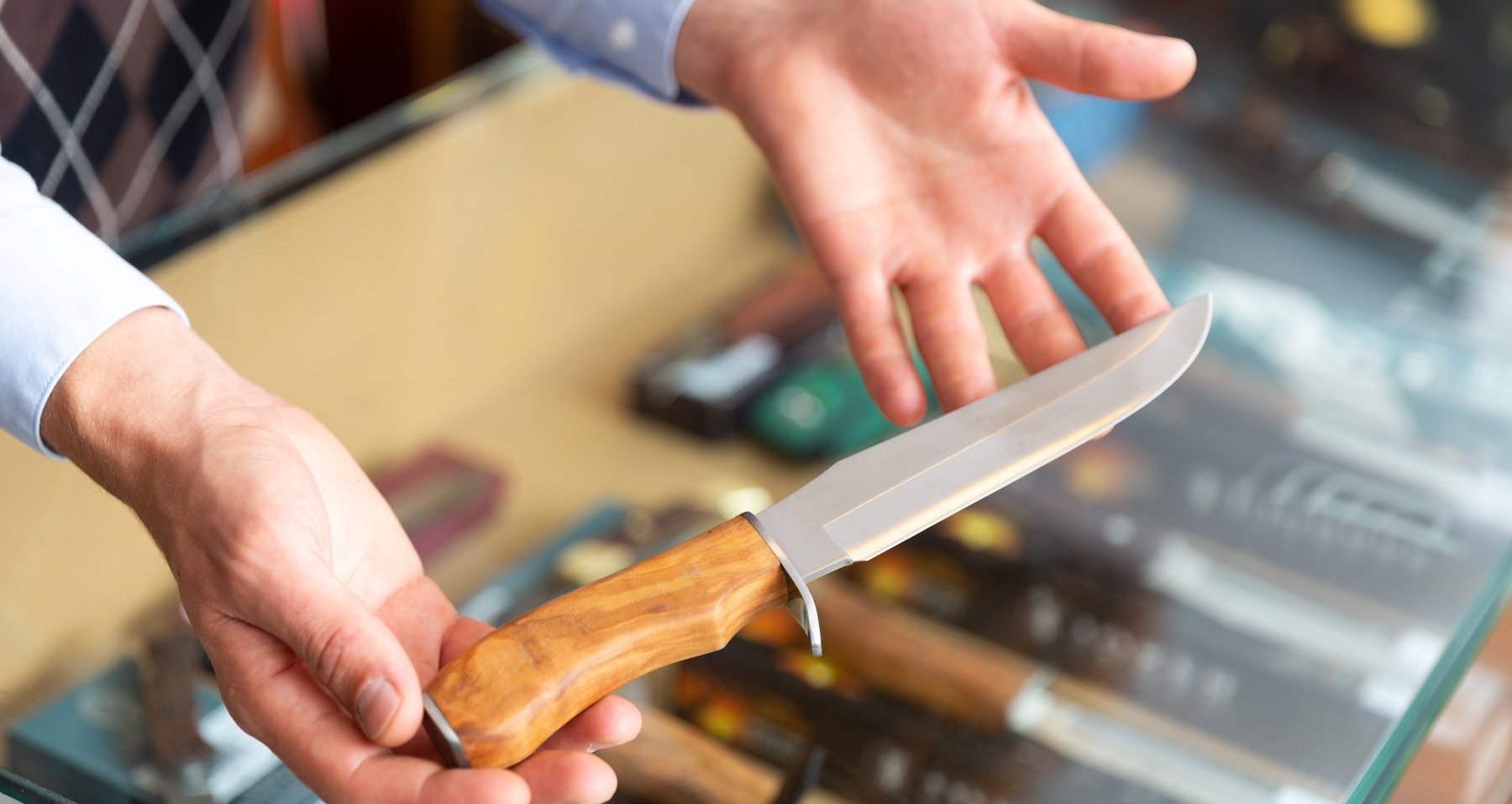
The knife counter is a fixture of any shooting show, and the Home Office has now confirmed that everyone behind one will need a police-issued licence. The government response to its consultation on licensing knife sales, published on 25 November with a written statement from policing minister Sarah Jones, says the Government “intends to legislate to introduce a licensing scheme for sales and imports of knives”, covering businesses and private sellers alike.
For an exhibitor selling stalking, bushcraft or kitchen blades at the National Exhibition Centre (NEC), and for the visitor who buys one, the scheme changes who may stand behind that counter. Here is what it means at the show, with the full story on ShootingUK linked below.
Which exhibitors would need the licence?
Any business selling a knife or bladed article, whether in a shop or at a distance, and a stand at a show is a sale by a business. The licence would last three years and be renewable, with a fee set at full cost recovery that has not yet been fixed. Conditions “may include regulated storage and display of blades”, which for an exhibitor could mean cased displays rather than open tables, and enforcement agencies would be able to revoke a licence where conditions are not met. Selling without the licence would be a criminal offence.
Overseas makers who exhibit in Britain are caught too. A seller based abroad would have to appoint a UK intermediary company to hold the licence, and a separate import licence would be open to UK businesses but not private individuals. The Home Office says it is exploring a combined sales and import licence.
The visitor buying a knife, and the one selling an old one
For the buyer, a knife bought from a licensed stand would come with the assurance that the seller holds the licence, and nothing in the response changes what a certificate holder or anyone else may own. The change bites on the private seller: a visitor who sells a knife he no longer uses, at a show, online or to a friend, would on the face of the response need a licence too, because both businesses and private sellers are covered.
There is no countryside exemption. The response says only that ministers “will carefully consider the case for exemptions for heritage collections, crafts and trades”, and the words countryside, hunting, stalking, fishing, agricultural and gamekeeping do not appear anywhere in the 30-page document.
How the sector answered the consultation
The consultation ran from 16 December 2025 to 24 February 2026 and drew 3,551 responses. Among online respondents, 52% opposed licensing business sellers and 61% opposed licensing private sellers; small and medium-sized businesses opposed the business licence by 79%, and 95% of the 255 collectors, re-enactors and historical fencers who responded opposed a licence for private sellers. Police, councils and the Crown Prosecution Service were largely in favour, though 44% of police respondents raised concerns about resourcing.
BASC and the Gun Trade Association (GTA) told the consultation in January that the proposals were the wrong way to tackle knife crime. The Countryside Alliance said: “The problem is not the lawful sale of knives but ensuring they do not fall into the wrong hands.” Andrew Goodacre, chief executive of the British Independent Retailers Association, said: “Some shop owners may decide to stop selling bladed items as a result of this licensing.” Ms Jones said: “If you make money selling knives, you should be responsible for making sure they are sold safely and lawfully.”
What happens next
There is no bill yet and no date. Legislation will be brought forward and “in due course” supported by guidance, and the Home Office says it will keep talking to small businesses, enforcement bodies and the collectors’ groups seeking exemptions. The fee, the licence conditions and the penalties beyond the new offences remain to be set, so exhibitors planning their next stand have time to put the case for a trade exemption through the GTA or BASC. The full story, with the consultation figures, every reaction and the questions the countryside has yet to ask, is on ShootingUK: Home Office to license all knife sellers despite majority opposition.
Frequently asked questions
Will exhibitors need a licence to sell knives at a show?
Yes, under the scheme the Government intends to legislate for. Any business selling a knife or bladed article, in a shop or at a distance, would need a police-issued licence lasting three years, and selling without one would be a criminal offence.
Do I need a licence to buy a knife?
No. The licence falls on the seller. A private individual who sells a knife, however, would also need a licence under the scheme as described.
When does the knife sales licence start?
No date has been given. The Government says it intends to legislate and will publish guidance in due course; the fee and the detailed conditions have not been set.