
Exhibitor spotlight: Optics Warehouse launches Air Rifle Warehouse
Lloyd Marshall of long-standing British Shooting Show exhibitor Optics Warehouse reveals why the Devon retailer has taken the plunge into airgun sales, why the show is the biggest date in the company's calendar – and what the future holds at the NEC
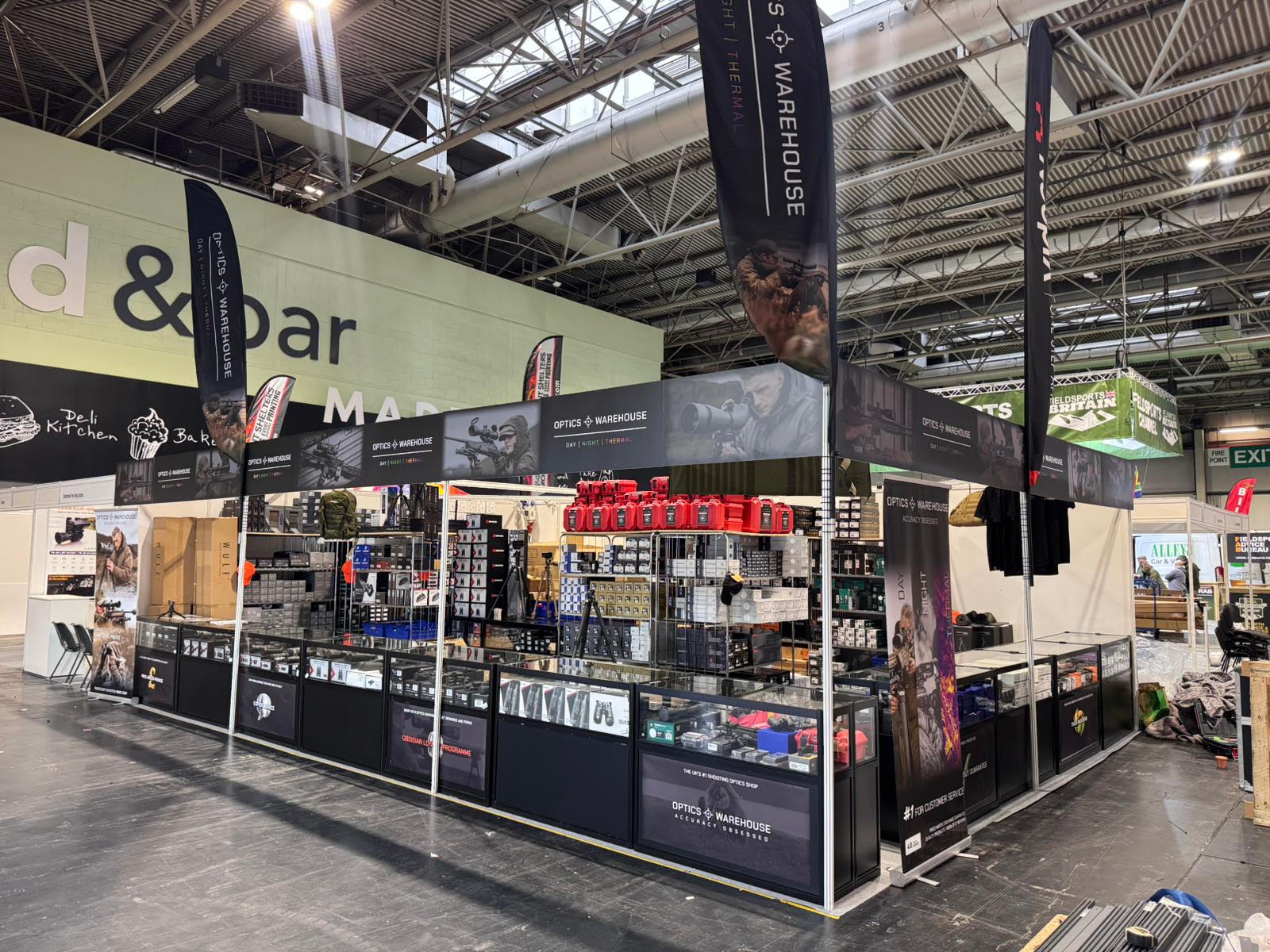
Optics Warehouse has been a fixture of the trade since 2007. Why take the leap into selling airguns now?
Lloyd Marshall: We’ve been wanting to launch Air Rifle Warehouse for some time – it’s been in the pipeline for the last 18 months to two years, but we’ve had other projects that kept skipping the queue. The premises we’re in, which we’ve occupied for two years now, has a basement, and when we moved in we simply never used it. So we’ve converted it into a dedicated airgun warehouse. We’ve built an armoury down there and installed a 20-metre range with a retail counter, so customers can handle the rifles and, if they decide to buy, we can set the gun up for them and zero it on the range before they leave.
An indoor range attached to the gun counter is quite a statement for a new venture. Is that the plan – service first?
LM: It’s not a unique selling point, because I know other retailers offer it, but it’s offering something that maybe some of the local shops around us don’t. We’re in Torquay, in Devon, and we’ve started off relatively small because we need to build the business. We didn’t expect to hit the ground running and be as big as we are with Optics Warehouse. But the foundations are all there for people to be looked after properly.
Why does airgunning make sense as the first move into guns, rather than rimfire or centrefire?
LM: We’ve never shied away from guns, but we’ve always concentrated on what we know and what we’re well known in the trade for. We’ve deliberately kept away from rimfire and centrefire because of the licensing issues in this country – it’s just easier, and airguns are a better fit. A big proportion of our optics sales already goes into the air rifle market, so it made complete sense to follow that route into air rifles, CO2 rifles and pistols.
Which brands have made the cut for launch?
LM: We’ve got the main players – Weihrauch, Daystate, Brocock, BSA and FX – plus some Walther bits and pieces and Umarex CO2 pistols. You can probably see from the Air Rifle Warehouse website that our product range is fairly extensive for a new business, but it’s probably not as extensive as some of the competitors out there. That’s simply because we’re starting the ball rolling and getting things off the ground.
At the time of writing you’re collection only. Is that a deliberate choice?
LM: No, not out of choice at all. We’re waiting for our Royal Mail RFD account to be opened, which should be any time soon, from what we’re being told. Once that’s up and running we can offer RFD-to-RFD shipment across the country. In the meantime, for the local guys, we’re offering £30 cash back for anyone who collects.
What does the long-term vision look like for the site?
LM: We’ve only taken up part of the basement so far. When business allows, the plan is to open up the rest and put in a proper range – somewhere between 30 and 40 metres, with a few different lanes. We’ve also deliberately kept the entrance to Air Rifle Warehouse separate from the rest of the building. Because Optics Warehouse is predominantly internet-based, we don’t currently open at weekends, but with that separate entrance, when we get to the point where there’s plenty of footfall, we can open Air Rifle Warehouse on Saturdays and potentially Sundays as well.
Air Rifle Warehouse isn’t the only new string to the bow, is it? What else sits within the group these days?
LM: There’s always something going on – Shaun, our director, has his fingers in all sorts of pies. As well as Air Rifle Warehouse, we’ve recently launched our own clothing brand, MRAD, and we’ve got South West Optics, which serves the birding community with binoculars, spotting scopes and rangefinders, and another website called Tactical Scope.
MRAD sounds a long way from scopes and pellets. What’s the thinking there?
LM: The name is a nod to the shooting community, but Shaun has deliberately kept it far enough away from the shooting world that if somebody knows nothing about the sport, it’s still quite a cool brand to look at and wear.
How do you stop all those optics businesses treading on each other’s toes?
LM: We’re in a transition period. Tactical Scope is slowly becoming what the old-school Optics Warehouse used to be – the value end of the scope market, concentrating on the more affordable optics, because not everybody wants to spend £500-plus on a scope for their air rifle. That frees Optics Warehouse to concentrate on the premium brands we’re well known for, rather than the two competing with each other.
Optics Warehouse built its reputation on keen pricing. Has the positioning changed over the years?
LM: In the early days we were very price-led. That’s how JP and Shaun, the owners – father and son – started the business and got it to where it is now: buying sensibly in volume and passing the savings on to the customer. But we like to look at Optics Warehouse as more of a premium outlet these days. Years ago we’d take clearance stock to the shows with everything at £10 a go; now the shows are about taking products people actually want to buy, and about the service and advice that go with them.
And where do you fit into all of this at Optics Warehouse?
LM: I’m an assistant director – I muck in with anything and everything. The day-to-day running of the business is left to me and Tess Preston. We’re equals and work very closely together – Tess leads on the operations side, looking after the staff and keeping everything running, while I bring more of the shooting and product knowledge, so I lean towards the sales end of it. I’m a shooter myself too, though I’m more centrefire; I love my deer stalking. Customers come up to me at shows and say, “You’ve got the best job in the world – you can go out shooting whenever you want,” and then you tell them that by the weekend you can’t always be bothered, and they look at you a bit surprised. It can become a bit of a busman’s holiday.
Which airgun-relevant optics brands are the big sellers for you?
LM: We’re the biggest importer of Vector Optics in the country, so Vector is a big one for us. We’ve also got Falcon, Delta, Sightron, Vortex and Arken, plus a brand our trade business brings in from China called Wolf, which is very popular. At the premium end we keep Schmidt & Bender – not necessarily for the airgun boys, but it’s there. And it’s not just scopes: we sell everything from rings and Picatinny rails to cleaning products, clothing and accessories – the whole shooting match. Apart from at Air Rifle Warehouse, there are just no guns.
What trends are you seeing in airgunners’ buying habits at the moment?
LM: The big one is that digital optics are now so accessible and affordable that we sell far more digital optics than day optics. Night vision and thermal are the flavour of the month. Day optics in the UK, even for airgunners, aren’t a thing of the past exactly, but the market has clearly shifted.
So is the traditional day scope in terminal decline for airgun use?
LM: No, we still sell a lot of day optics, but mostly at the budget end. Falcon is very popular with air rifle shooters – the T50 is extremely popular at around £450 to £500 – but we don’t sell massive numbers at the top end. The target boys still want day scopes, but once they’ve bought one they’re happy with, they don’t change very often. It’s the pest controllers who are moving to digital and thermal. And there’s a massive market out there for the hobbyist – the guys plinking in the back garden who won’t be spending north of £500 on a scope. That’s where Vector and the more affordable brands we bring in come into play.
If a complete newcomer stumbled across airgunning tomorrow, could they ring you up and be sorted from scratch?
LM: We’ve got everything here to look after them. Most of our revenue comes from online sales, so we’re not massive on the phones, but we do have four – soon to be five – on our technical team. Three of them are shooters, and the majority of what they do is air rifle stuff. They really know their stuff. So yes, a newcomer could ring us up, chew our ear off for an hour and come away with everything they need, from the rifle to the last tin of pellets.
Give readers a sense of scale. How big is the operation behind the websites?
LM: The warehouse is around 15,500 square feet. We’ve got something like 4,000 products listed across the range, and a growing chunk of that is now airgun-related and building all the time.
You’re a familiar face at the British Shooting Show. Where does it sit in your calendar?
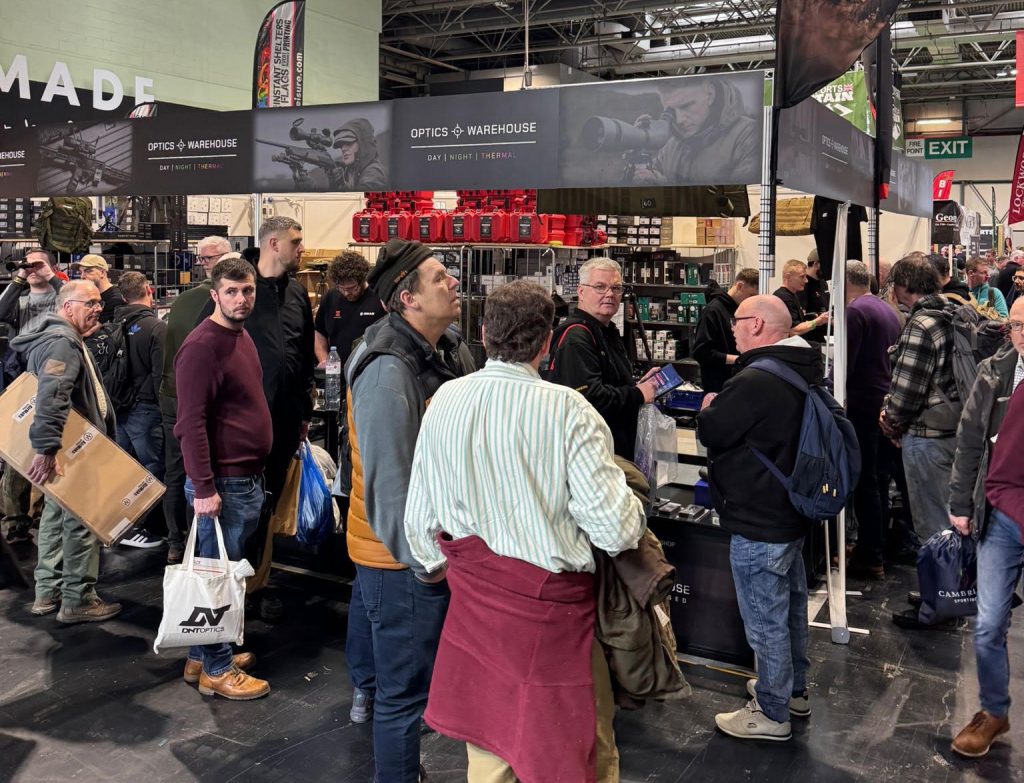
LM: Right at the top. Historically we’ve done four shows a year – and the British Shooting Show is the biggest one for us by some distance. It’s the busy one. Because Optics Warehouse is predominantly an internet-based company, we don’t often get to interact with our customers the way we do at the shows, so those three or four weekends a year are our opportunity for customers to actually see us, handle the products and talk to people who genuinely know them. We’re there to make some revenue too, of course – but that face-to-face contact is something you simply can’t replicate online.
What difference does being indoors at the NEC make to you as an exhibitor?
LM: A huge one. In the UK the weather is never guaranteed, and at the outdoor events it can make or break you. At the NEC it doesn’t matter that it’s February and cold outside – it’s a constant temperature inside, the stock stays dry, the customers are comfortable and they stay longer. That predictability is worth an enormous amount when you’re planning a show.
What tends to do well for you on the stand at the show?
LM: Night vision and thermal are the flavour of the month, whether that’s for the air rifle guys or the rimfire and centrefire boys – that’s where the majority of our show revenue comes from now. Gone are the days when we’d turn up with bins of clearance stock at £10 a go; these days the stand is about the products people have been researching all year and want to see in the flesh, backed up with proper advice from people who shoot themselves.
Will Air Rifle Warehouse get its own stand at the British Shooting Show?
LM: That’s very much the plan. At the moment we exhibit only as Optics Warehouse, but we have spoken about having a separate stand for Air Rifle Warehouse once the brand is a bit more recognised. It won’t be 2027, but maybe in 2028 we’ll be looking at a smaller stand next to the Optics Warehouse one, so visitors can see the two sides of the business together – the optics on one stand and the rifles to put them on next door.
Finally, what does the future hold – for the business and for your relationship with the show?
LM: Steady growth, really. We didn’t expect to hit the ground running, but the long-term picture is the full-size multi-lane range downstairs, weekend opening through that separate entrance, RFD-to-RFD delivery nationwide and a brand that stands on its own two feet alongside Optics Warehouse. We know the airgun market, we already serve a huge slice of it through optics, and now we can look after shooters from the rifle upwards. And the British Shooting Show will be a big part of that journey – it’s where we meet our customers, where the new products get their airing and, before long, where Air Rifle Warehouse will make its debut in its own right. If we can keep giving people a proper reason to come and see us, at the NEC and down here in Devon, the rest should take care of itself. It feels like the most natural next step we’ve ever taken.